' A' is a neutral organic compound (M. F :  ). On treatment with aqueous
  , ' A ' forms a compound ' B ' which is soluble in dilute acid. ' B ' on treatment with aqueous
  produces a compound ' C ' which on treatment with
  produces ' D '. Hydrolysis of ' D ' produces ' E ' which is also obtainable from the hydrolysis of '
  on treatment with acidified
  produces
  . '
. '  ' contains two different types of hydrogen atoms. The structure of ' A ' is
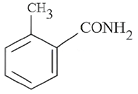
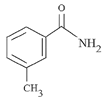
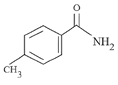
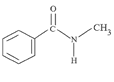
Text Solution
Verified by ExpertsC
Compound A undergoes bromination with aqueous  to form B , which is soluble in dilute acid, indicating an amino group is present.
B undergoes diazotization with  at
at  to form diazonium compound C .
The diazonium compound is then treated with  to form nitrile compound D .
Hydrolysis of D produces carboxylic acid E.
When A is treated with acidified  , it produces F containing two different types of hydrogen atoms.
This reaction sequence is characteristic of anthranilic acid (2 -aminobenzoic acid), where the amino group directs bromination to the para position, and subsequent reactions proceed through the diazonium intermediate.
The structure shown in option , which is 2 -aminobenzoic acid, fits all these transformations.
Prepare Smarter with CGP Edu
Get practice questions, solutions, and test series in one place.
Write a Review
Share your experience with this question and solution.
Commentary
Send your comment, doubt, correction, or feedback to admin.
Similar Questions
Explore conceptually related problems